

Durable Leather Dog Collars for Barn Dogs: 2026 Guide
Table of Contents
- Why Barn Dogs Need Durable Leather Dog Collars
- Understanding Leather Grades: Full-Grain vs. the Rest
- Best Leather Collar for Working Dogs: What to Look For
- Leather Dog Collar Sizing Guide for Farm Dogs
- How to Clean Leather Dog Collars After Barn Duty
- Leather vs. BioThane and Nylon: Which Holds Up on the Farm
- Customization and Construction in Durable Leather Dog Collars
- Frequently Asked Questions
Last Updated: September 1, 2026
Why Barn Dogs Need Durable Leather Dog Collars
Barn dogs work harder than most pets. A livestock guardian running fence lines, a herding dog pushing cattle through mud, or a terrier keeping the grain store clear puts gear through daily abuse that destroys cheap collars in weeks. The case for durable leather dog collars comes down to reliability: a collar that fails creates a real safety problem. A dog that slips its collar near livestock, machinery, or a road is a dog in danger.
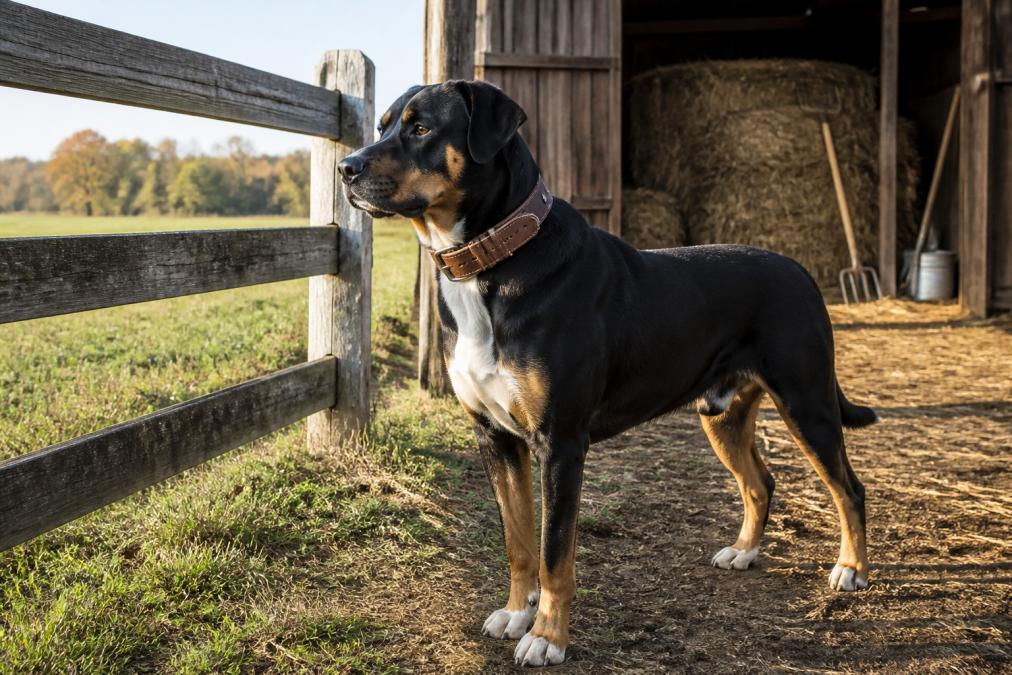
Barn-Specific Environmental Stressors
Barn dogs face conditions that sidewalk walkers never encounter. Moisture and mud kill cheap collars fast. Nylon absorbs water and stays wet, causing skin irritation and bacterial growth. Low-grade leather waterlogged with mud dries stiff and cracks. Full-grain leather with proper waterproof coating sheds moisture and dries supple.
Abrasion is constant. Barn dogs push through brush, squeeze under fences, and rub against rough wood and metal daily. Chemical exposure matters too, fly spray, wound treatments, and barn disinfectants degrade low-quality dyes and finishes quickly. Hardware corrosion is the silent failure point. A rusted buckle or D-ring weakens the attachment and accelerates leather breakdown.
Understanding Leather Grades: Full-Grain vs. the Rest
Full-grain leather is the outermost hide layer with the tightest, most intact fiber structure. It has the highest tensile strength and best long-term wear characteristics of any natural collar material.
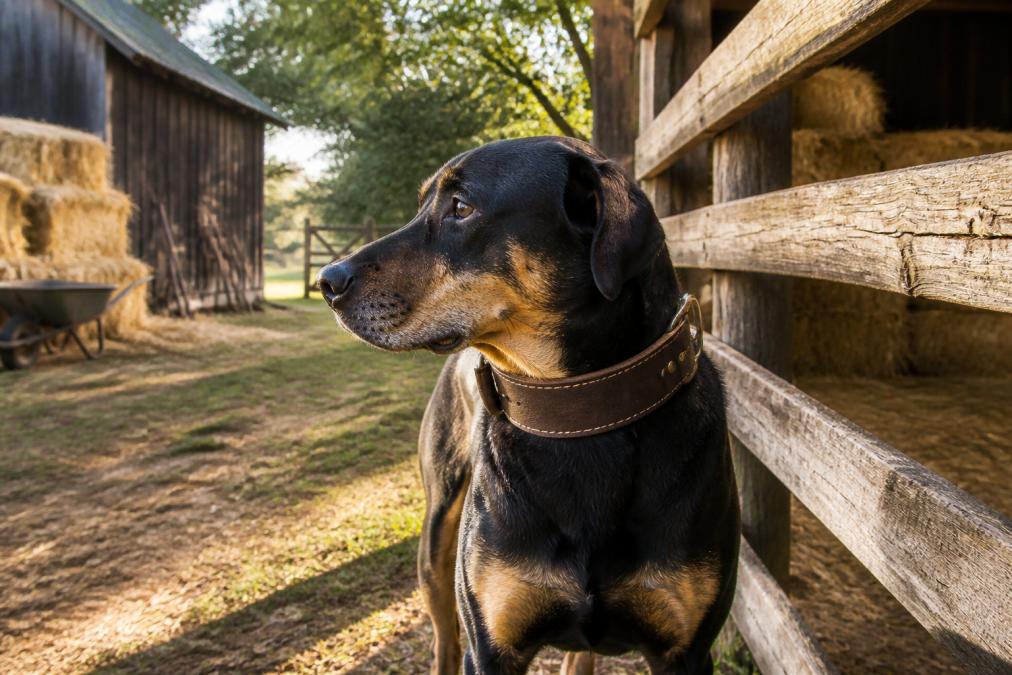
Top-grain leather has been sanded and buffed to remove imperfections, which also removes the densest fiber layer, reducing abrasion resistance and longevity. It looks cleaner but wears out faster under working conditions.
Latigo leather is the traditional choice for working animal gear in North American ranching. This tanned and re-tanned cowhide combines suppleness with exceptional tensile strength, is weather-resistant, and develops a rich patina over time. Many best working dog collars use latigo for these reasons.
Split leather and bonded leather sit at the bottom. Split leather comes from inner hide layers and has significantly lower tensile strength. Bonded leather is reconstituted scrap. Neither belongs on a working dog.
The break-in period for full-grain leather is real. A new collar will be stiff for the first week or two as it conforms to the dog's neck. Latigo breaks in faster and reaches a supple, form-fitting texture that cheaper materials never achieve.
Best Leather Collar for Working Dogs: What to Look For
The best leather collar for working dogs prioritizes function over appearance. Width and thickness matter more than most buyers realize. A wider collar distributes pressure across a larger neck surface, reducing injury risk during sudden lunges or equipment snags (peer-reviewed research). For medium to large working dogs, at least one inch width is practical minimum.
Riveted construction anchors layers mechanically, independent of thread integrity. Hand-stitched collars with rivets at stress points offer the best approach.
Feature |
Why It Matters for Barn Dogs |
|---|---|
Full-grain or latigo leather |
Highest tensile strength and abrasion resistance |
Rust-proof brass hardware |
Prevents corrosion in wet, muddy environments |
Riveted construction |
Holds under tensile load when stitching is stressed |
Adjustable fit with multiple holes |
Accommodates weight changes and seasonal coat variation |
Non-toxic dyes |
Safe for dogs that contact livestock feed and water |
Quick-release or safety buckle |
Prevents entrapment in fencing and equipment |
Hardware Durability and Rust Resistance
Rust-proof brass hardware is standard for serious working dog gear. Brass does not rust. Chrome-plated steel will eventually chip or wear, exposing base metal to moisture (nist.gov). In barn environments where collars are wet and muddy regularly, chrome-plated hardware corrodes within a single season.
Solid brass buckles, D-ring reinforcement, and keepers must be cast or forged brass, not plated. The D-ring takes the most stress as the attachment point for leash, tie-out, or tag. D-ring reinforcement through riveting or heavy thread with backing plate prevents the ring from tearing through leather under sudden tensile load.
Brass develops a natural patina alongside leather, and the two age compatibly. A properly maintained collar with brass hardware can outlast several cheaper replacements.
Safety Release Mechanisms
A dog working around fencing, gates, hay bales, and farm machinery faces real entrapment risk. A collar that cannot be released quickly in an emergency is a hazard.
Quick-release buckles offer the fastest release under stress with a single press. The trade-off is that quick-release hardware is generally not as strong as traditional tongue-and-bar buckles under sustained tensile load. For most barn dogs, quick-release is the right choice.
Martingale design collars tighten under tension (preventing slip-out) but have a defined maximum tightness that prevents choking. They are less suited to dogs working near wire fencing or confined spaces with equipment, because tightening can catch on obstacles.
Leather Dog Collar Sizing Guide for Farm Dogs
Proper sizing starts with one measurement: neck circumference. Measure around the dog's neck where the collar will sit, typically two finger-widths below the ears. Add two inches to that measurement for minimum collar length.
Adjustable fit is especially important for working dogs. Weight fluctuates with workload and season, and a collar that fits perfectly in summer may be too tight on a dog carrying a heavier winter coat. Look for collars with at least five adjustment holes spaced at half-inch or one-inch intervals.
Dog Size |
Typical Neck Circumference |
Recommended Collar Width |
|---|---|---|
Small (under 25 lbs) |
10-14 inches |
5/8 inch |
Medium (25-60 lbs) |
14-18 inches |
3/4 to 1 inch |
Large (60-90 lbs) |
18-22 inches |
1 to 1.5 inches |
Extra Large (90+ lbs) |
22-26 inches |
1.5 to 2 inches |
The two-finger rule is the standard fit check: you should be able to slide two fingers flat between the collar and the dog's neck. Tighter risks pressure and chafing, especially when leather is new. Looser and the collar can catch on objects or be pulled off.
For livestock guardian breeds like Great Pyrenees or Anatolian Shepherds working unsupervised over large areas, sizing up one level and checking fit monthly is practical.
How to Clean Leather Dog Collars After Barn Duty
Proper cleaning is the difference between a collar lasting five years and one cracking apart in eighteen months. Remove the collar before cleaning. Shake off loose mud and debris. Use a damp cloth, not soaking wet, to wipe down the leather. For dried mud, a soft-bristle brush loosens debris without scratching. Never submerge a leather collar; full saturation weakens fiber structure and can cause delamination.
Never use dish soap, household cleaners, or alcohol-based products. These strip natural oils, leaving leather dry and prone to cracking. Use purpose-made leather cleaner or pure saddle soap.
After cleaning, air dry away from direct heat. Once dry to the touch, apply conditioner.
Leather Conditioning for Working Dogs
Leather conditioning for working dogs should happen more frequently than most owners expect. A barn dog's collar depletes natural oils faster than a house pet's collar. Conditioning every two to four weeks during heavy use is reasonable. Collars soaked through should be conditioned after every thorough drying.
Use a penetrating oil-based product, not surface wax or polish. Neatsfoot oil and lanolin-based conditioners restore flexibility and maintain supple texture. Apply with a clean cloth in circular motions, paying particular attention to areas around buckle holes and D-ring where leather flexes most. Wipe off excess after ten minutes.
Leather vs. BioThane and Nylon: Which Holds Up on the Farm
Each material has legitimate use cases depending on what the dog actually does.
BioThane is polyester webbing coated in thermoplastic polyurethane. It is fully waterproof, nearly odor-resistant, and can be hosed down without conditioning or drying protocol. For dogs working in water or consistently wet climates, BioThane is a serious competitor. It has good tensile strength and requires no break-in.
The trade-off is that BioThane does not develop the structural integrity of full-grain leather over time. It does not conform to the dog's neck or have the same long-term abrasion resistance. In a dry barn environment, well-maintained leather outlasts BioThane on abrasion alone.
Nylon is the budget option and performs like one in a barn. It absorbs moisture, retains odors, and edges fray under abrasion. Nylon buckles rarely handle the tensile load a large working dog generates. For barn dogs, nylon is short-term.
Leather wins on long-term durability, breathability, and improvement with use. It loses on immediate waterproofing and maintenance simplicity. A leather collar never conditioned fails faster than neglected BioThane. But properly maintained leather outlasts both alternatives by years.
Material |
Waterproof |
Abrasion Resistance |
Maintenance |
Lifespan (Working Dog) |
|---|---|---|---|---|
Full-grain leather |
With conditioning |
Excellent |
Regular conditioning |
Many years |
BioThane |
Yes |
Good |
Minimal |
Several years |
Nylon |
No |
Poor |
Low |
One to two seasons |
Customization and Construction in Durable Leather Dog Collars
Mass-produced and handmade leather dog collars are not the same product. Construction details tell the real story.
Hand-stitching with waxed thread is slower and more expensive than machine stitching but is repairable. A broken stitch can be re-stitched in the field. A broken machine-stitched seam tends to run, unraveling more collar with each use.
Riveted construction at D-ring and buckle points adds mechanical strength independent of stitching. The best working collars use both: hand-stitching along the body and rivets at every stress point.
Customization on a working dog collar serves practical function. Name stamps, ranch brands, or contact information pressed into leather help identify a dog that ranges widely. Personalized collars with the owner's phone number are sensible for livestock guardian breeds working large properties.
Width, hole spacing, and hardware choice on a custom collar can be specified to match the actual dog rather than nearest standard size. For dogs with unusual neck shapes, deep-chested breeds, heavily muscled working dogs, or dogs with neck injuries requiring specific fit, a made-to-order collar is a practical investment.
Check the USDA Animal Care resources on livestock guardian dog management for guidance on collar and identification requirements for dogs working on agricultural properties.
Farm dogs earn their keep every day, and their gear should match that standard. The biggest mistake barn dog owners make is buying a collar designed for suburban pets and expecting it to hold up in a working environment. Full-grain or latigo leather with rust-proof brass hardware, riveted construction, and proper conditioning is the combination that actually lasts. Double C Ranch LLC makes leather dog collars to order for exactly this kind of use, practical, well-constructed, and built with barn life in mind. Browse our current leather goods inventory and get in touch to discuss a made-to-order collar built for your dog's specific work.
Frequently Asked Questions
Are leather dog collars good for barn dogs exposed to mud and water?
Full-grain and latigo leather collars hold up well on working dogs when they are conditioned regularly. The natural fibers in quality leather resist abrasion and, with a waterproof coating or periodic conditioning, repel moisture well enough for daily barn use. The key is maintenance: a collar that dries out and cracks from neglect will fail quickly, but one that is cleaned and conditioned after wet or muddy sessions can last for years of heavy farm activity.
How do I measure my dog's neck for a leather collar?
Wrap a soft measuring tape around the base of your dog's neck where the collar will sit. Add 2 inches to that measurement for a comfortable fit — you should be able to slip two fingers between the collar and the neck. For large working breeds common on farms, measure after a workout when the neck muscles are slightly fuller. Always check the specific size chart for the collar you are ordering, since sizing varies between makers.
What hardware features matter most in a heavy-duty dog collar?
Look for rust-proof brass or solid stainless steel hardware. Brass is the traditional choice for working dog gear because it resists corrosion even after repeated exposure to mud, water, and manure. The D-ring should be riveted, not just stitched, to handle tensile load without pulling free. Avoid zinc-alloy or plated hardware — the finish wears off quickly in barn conditions and the underlying metal rusts fast.
How often should I condition a leather dog collar used on a working dog?
For a barn dog that works daily, condition the collar every two to four weeks. If the collar gets soaked or caked in mud, clean it first with a damp cloth, let it dry fully at room temperature, then apply conditioner before the leather stiffens. Avoid heat sources like direct sunlight or a radiator for drying — they cause cracking. A well-conditioned collar develops a protective patina over time that actually improves its weather resistance.
Do leather dog collars hold up better than nylon for farm use?
Quality leather dog collars generally outlast nylon on farms when properly maintained. Nylon absorbs barn odors, frays at edges, and the hardware corrodes faster. Leather develops abrasion resistance over time and is easier to clean thoroughly. BioThane is a synthetic alternative worth considering for very wet climates since it is fully waterproof, but it lacks the tensile strength and long-term durability of thick full-grain or latigo leather under heavy daily use.
This article was written using GrandRanker
How to Design Your Perfect Custom Embroidered Hoodie (Step-by-Step Guide)
Cowgirl Hoodie: The Complete Buyer's Guide
Related Posts

Cowgirl Hoodie: The Complete Buyer's Guide


